
Inflammation: Friend, Foe, or Just Misunderstood?
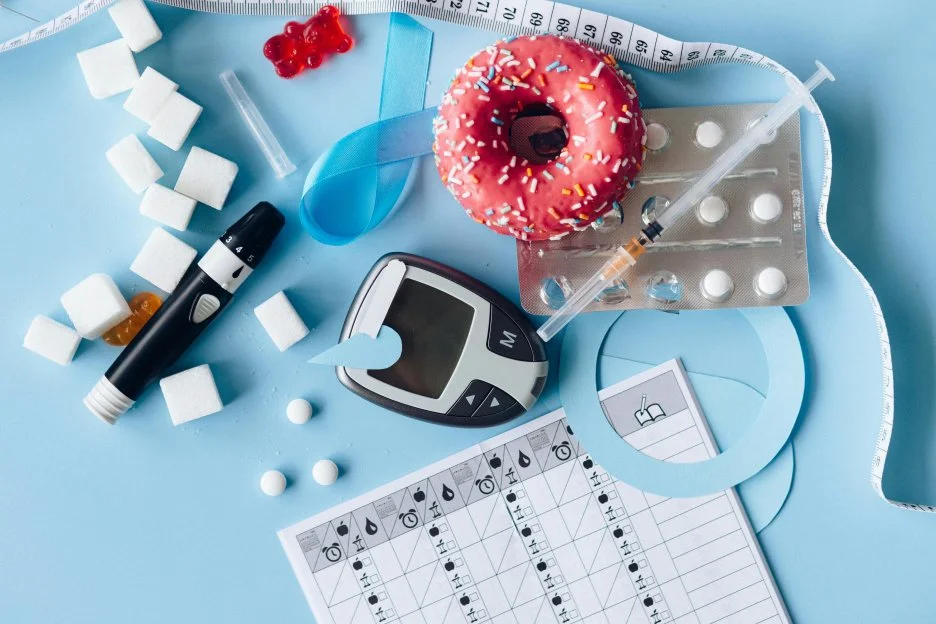
Over 40 years ago, I traveled to southeast Pennsylvania to observe an osteopath who mainly treated the Amish. His method was unusual — he injected sugar water into torn ligaments, shoulders, and even hernias.
This was called prolotherapy (dextrose injection). The idea was to deliberately spark inflammation so the body’s healing troops would rally to repair the damage. Patients were told to avoid ibuprofen for two weeks before and after, because suppressing inflammation would block the healing.
To my surprise, it worked. That day I learned something important: sometimes, inflammation is part of the cure.
What Inflammation Really Is
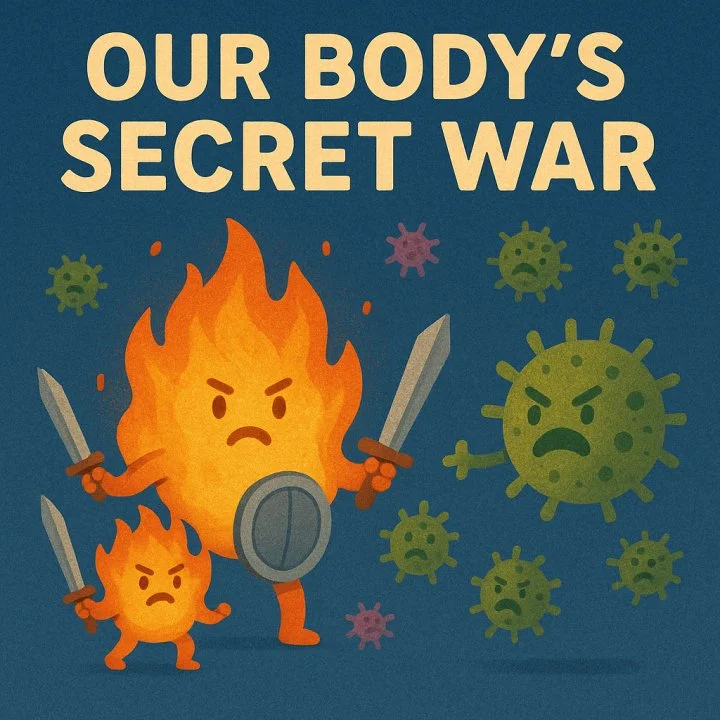
The word inflammation comes from the Latin inflammare — “to set on fire.”
And that’s exactly what it looks like: redness, heat, swelling, and pain. You’ve seen it in a paper cut, a sprained ankle, or a mosquito bite.
With out this fiery response — this internal war —your body couldn’t defend against invaders or repair injured tissues. Inflammation is how we heal.
But here’s the issue: low-grade, chronic inflammation is the insidious kind. You don’t see it like you would a cut or a sprain. Instead, it simmers quietly for decades — until it finally shows up as heart disease, cancer, or type 2 diabetes.
And it doesn’t always come with obvious alarms. The signs can be subtle:
Constant fatigue or loss of energy
Depression or anxiety that lingers
Muscle and joint pain without injury
Digestive issues (constipation or diarrhea)
Belly fat and difficulty losing size
Brain fog and lack of focus
Heart disease and cancer together account for just over 40% of U.S. deaths,and adding diabetes brings that figure to about 42%. Chronic diseases overall — often fueled by long-term inflammation — account for roughly 70%of deaths.
And yes, when you are in my office, you’ve heard me preach not just against sugar, gluten, and dairy — but also the importance of sleep, heart coherence, HRV (stress regulation), sunlight, and daily exercise. These are the practices that cool the fire before it burns.
Cholesterol: The Patch Crew, Not the Villain
Think of your blood vessels as highways.
Sugar, high blood pressure, toxins = jackhammers tearing up the road.
Cholesterol = the repair crew patching potholes.
If the damage keeps happening, patches pile up into blockages. But the cholesterol didn’t cause the pothole — it was called in to fix it.
In reality, LDL cholesterol is both patch crew and raw material: it helps repair, but when too much gets trapped in artery walls, it drives plaque formation.
Blaming cholesterol alone is like blaming the road crew for traffic.
Statins: The Double-Edged Sword
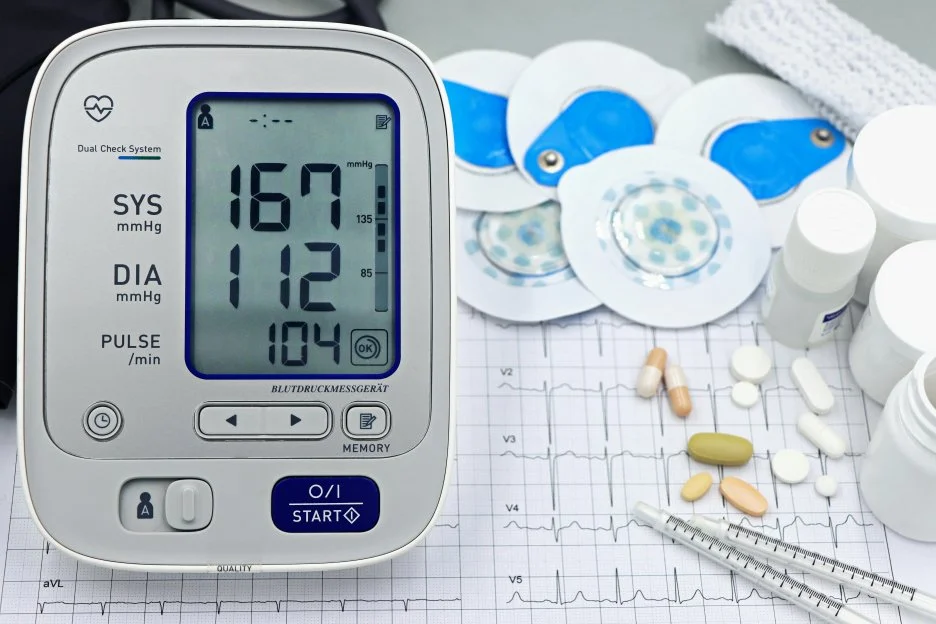
Statins are the most prescribed drugs in the world. They lower cholesterol and cool down some inflammation. For high-risk patients, they are supposing reduced heart attack and stroke risk.
That’s the short-term benefit. But here’s the full picture you won’t see in a commercial:
Benefits
Lower LDL cholesterol quickly
Reduce cardiovascular events (≈22% per 39 mg/dL LDL drop)
Stabilize plaques so they’re less likely to rupture
Anti-inflammatory effect inside arteries
Risks and Potential Side Effects
Muscle & Energy
Muscle pain, cramps, weakness (<10% attributable to statins in blinded trials)
Potential rare yet severe muscle breakdown (rhabdomyolysis, <0.1%)
Lowered CoQ10 levels (supplements haven’t consistently fixed symptoms) Metabolic
Higher risk of type 2 diabetes (~9–12%, higher with intensive doses)
Brain & Nerves
Reports of mental fuzziness, memory issues, and sleep problems
Rare aphasia/dysphasia (speech trouble) in case reports; not proven causal
FDA lists rare, reversible memory loss and confusion
Liver & Kidneys
Mild enzyme elevations (1–3%)
Very rare serious liver injury (~0.001%)
Kidney risk if severe muscle breakdown occurs
Digestive & Miscellaneous
Nausea, constipation, diarrhea, headaches
Cold-like symptoms
The Lymphatic System: Your Body’s Cleanup Crew
When inflammation sparks, your body floods the area with fluid, white blood cells,clotting factors, and proteins. As fluid builds, the lymphatic system kicks in — like storm water draining into the sewer.
It’s your cleanup crew, your immune system, your garbage disposal. You could live in a temple or a mansion — but if no one takes out the trash, you’re living in a dump.
That’s why I look at skin health as a major indicator. What the lymphatic system misses, the skin — your largest detox organ — pushes out. A trained esthetician who has this knowledge is golden.
Now you see why I’ve invested in advanced tools that are FDA-cleared, Lymphstar and Multi-frequency lasers (including a new violet-blue anti-viral/bacterial laser), along with private advanced training.
Because at the end of the day, I’m not only a physical therapist.
I’m your human maintenance engineer.
Patterns Over Goals
When making changes, don’t set big, lofty goals. Instead, create better patterns and routines to get you there step by step.
Discipline sets you free. Consistency transforms!
Your Turn
Please leave a comment if these Cliffs’ Notes help you. Lately, most of the feedback has been coming from clients in Europe, Mexico, and South America.
One client visiting Los Angeles from South America told me they went to the grocery store, saw the fish locker, and said:
“I wouldn’t feed that to my cats.”
It made me wonder — does food really have a higher standard outside the U.S.?
We would love to hear your thoughts.
Seasonal Call to Action
As fall approaches, there’s a huge benefit in scheduling a change-of-season tune-up rather than waiting for a full overhaul later.
Small corrections and pattern changes keep the system flowing and prevent bigger breakdowns. Make sure your body is at exponential health for the cooler months ahead.
Best in Health,
Clifton Matsuno PT
References (select)
Prolotherapy: Rabago D et al. Ann Fam Med. 2016;14(4):341–349.
Chronic inflammation: Furman D et al. Nat Med. 2019;25(12):1822–1832.
Mortality data: CDC/NCHS 2022.
Atherosclerosis pathophysiology: Libby P. Nature. 2002;420:868–874.
Statins efficacy: Cholesterol Treatment Trialists’ Collaboration. Lancet. 2010;376:1670–1681.
Statin diabetes risk: Sattar N et al. Lancet. 2010;375:735–742.
Muscle symptoms: Stroes ES et al. Lancet. 2015;385:2261–2267.
FDA statin label (cognitive effects).
Lymphatic system: Olszewski WL. Lymphology. 2003;36:99–106.
HRV biofeedback: Lehrer P et al. Front Public Health. 2020;8:582482.